 Skip-the-line available
 Dolmabahçe Palace and the Bosphorus
How the palace meets the strait, and how to combine it with a Bosphorus cruise or waterfront walk.
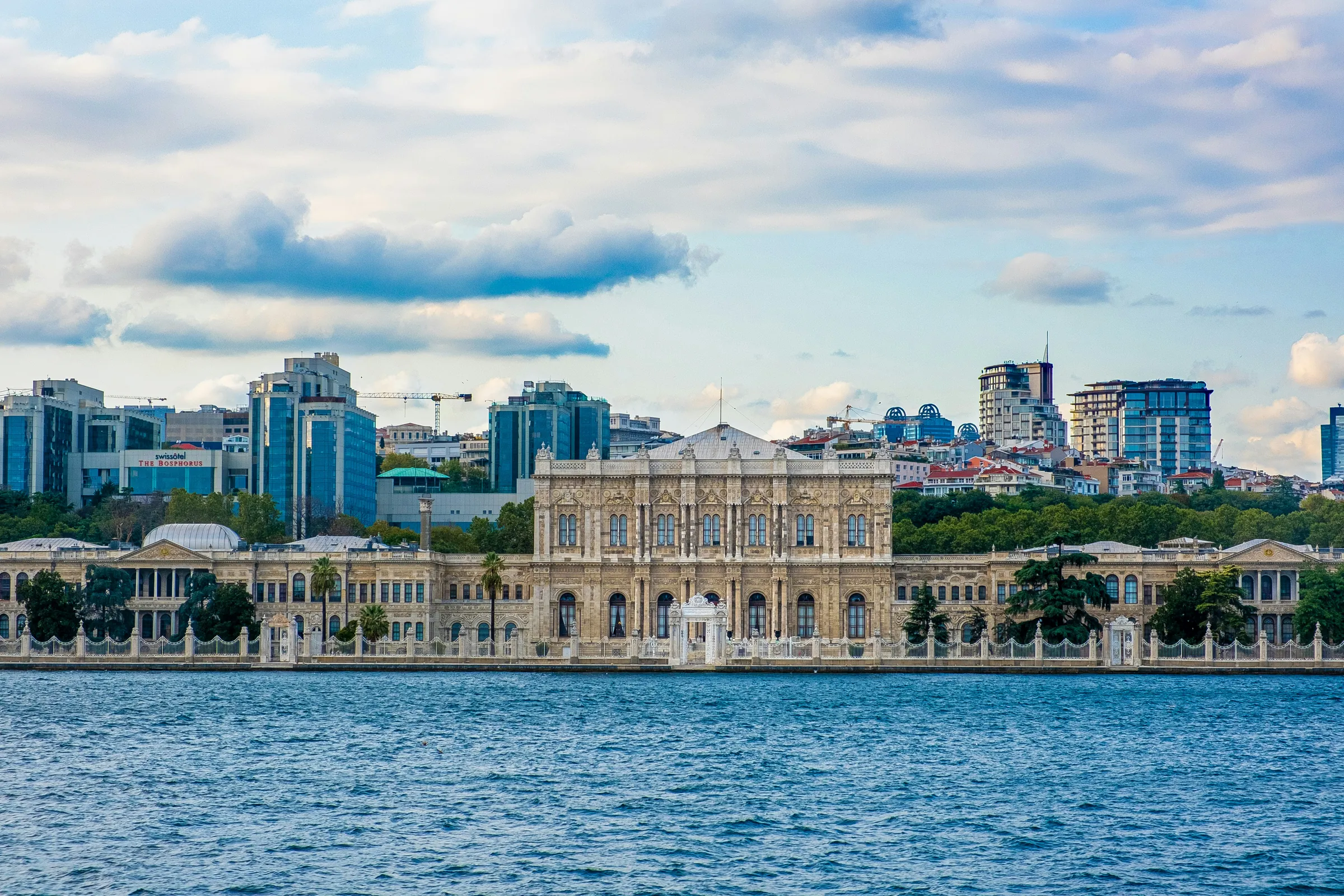
Dolmabahçe Palace was built to be seen from the water. It stands on the European shore of the Bosphorus in Beşiktaş, on a site that was once a bay used to anchor the Ottoman fleet, later reclaimed into an imperial garden, which gives the palace its name, "filled-in garden." Its long sea-facing facade and ornamental quay front the strait that divides Europe and Asia, and one of its three monumental gates opens directly onto the water. This guide covers why the palace and the Bosphorus are inseparable, how to see the facade from a cruise or ferry, how to combine the visit with a waterfront walk, and the neighbouring Dolmabahçe Mosque on the shore.
Why is Dolmabahçe Palace built on the Bosphorus?
Dolmabahçe Palace stands on the Bosphorus because its very site was created from the water: it began as a bay on the strait used to anchor the Ottoman fleet, then was gradually reclaimed during the 18th century into an imperial garden. That history is written into the name, which means "filled-in garden." When Sultan Abdülmecid I built the palace between 1843 and 1853, he sited it deliberately on the European shore in Beşiktaş so its long facade would face the water and command the strait that links the Black Sea and the Sea of Marmara. The palace occupies a 110,000-square-metre waterfront site, its eastern edge running along an ornamental quay where ships once moored. One of its three monumental gates, alongside the landward Gate of the Sultan and the Gate of the Treasury, opens directly onto the Bosphorus. The palace and the strait were designed as a single composition.
The Bosphorus setting shaped how Dolmabahçe Palace was meant to be experienced. Arriving dignitaries could approach by boat and step ashore at the palace's own water gate, greeted by a facade of white marble stretching along the quay, a European-facing image of a modernising empire. The strait itself, about 30 kilometres long and separating the European and Asian sides of Istanbul, has always been the city's central artery, and placing the imperial residence directly on it put the sultan at the heart of the waterway. Tall windows in the Ceremonial Hall open the interior toward the water, so the Bosphorus is present even from inside. Our concierge recommendation is to spend time on the palace's quay looking out at the passing ferries and ships; it is the view the building was designed around. The water is not a backdrop here, it is the reason the palace stands where it does.
Can I see Dolmabahçe Palace from a Bosphorus cruise?
Yes, and seeing Dolmabahçe Palace from the water is one of the finest views in Istanbul. A Bosphorus cruise, or even a scheduled public ferry along the strait, passes the palace's long white marble facade and ornamental quay, giving you the full sweep of the building that a landward visit cannot. This is the view the palace was designed to present, since the site was a reclaimed bay facing the water. Many cruises run from the Eminönü and Kabataş piers up the European shore, passing the palace early in the route before continuing toward the Bosphorus bridges and the waterfront mansions beyond. Public ferries share the same Istanbulkart fare system as the tram, making a simple scheduled crossing an affordable way to catch the facade. Our concierge recommendation is to pair an interior visit with a cruise so you see the palace both ways, from within its gilded halls and from the strait it commands.
To combine Dolmabahçe Palace with the Bosphorus by boat, the neat approach is to tour the interior in the morning, when the palace is quietest, then board a cruise or ferry afterward from the adjacent Kabataş or Beşiktaş pier, both a short walk along the shore. From the water you get the panoramic facade and a sense of the palace's scale against the strait, then continue up the Bosphorus past the bridges and shoreline mansions. Because the palace closes on Mondays, plan the interior portion for any other day. A cruise also frames the neighbouring Dolmabahçe Mosque, whose baroque minarets rise right on the waterfront beside the palace. Our concierge tip is to sit on the side of the boat facing the European shore for the palace views. Together, the guided interior route and the waterborne view give you the complete picture of a residence built to be admired from the sea.
How do I combine the palace with a waterfront walk?
Combining Dolmabahçe Palace with a waterfront walk is easy because the palace sits directly on the Bosphorus quay in Beşiktaş, with flat shoreline paths running in both directions. To the south, the promenade leads in about ten minutes to the Kabataş transport hub, where the T1 tram, ferries, and the funicular to Taksim all meet. To the north lies Beşiktaş proper, a lively district of cafés, ferry piers, and market streets a short stroll away. The walk hugs the strait the whole way, with ferries and ships passing on the water and the Asian shore visible across the channel. Our concierge recommendation is to bank the palace, a shoreline stroll, and a café stop into a single unhurried morning. Because the palace occupies a 110,000-square-metre site with gardens beside the quay, you can begin the walk within its own grounds before continuing along the public waterfront.
A satisfying half-day on the Beşiktaş waterfront starts at Dolmabahçe Palace in the first quiet hour after opening, moves through the state Selamlık and the residential Harem, then spills out onto the Bosphorus quay for a walk. From the palace you can stroll north into Beşiktaş for lunch by the ferry piers, or south to Kabataş to catch a cruise or ferry along the strait. The neighbouring Dolmabahçe Mosque, built in the 1850s on the shore, and the palace's 1890s Clock Tower are both worth a pause on the way. Because the whole area is walkable and connected by tram and ferry, you can improvise as the day unfolds. Our concierge tip is to leave the afternoon loose so you can extend the walk up the Bosphorus if the weather is fine. The waterfront rewards lingering far more than rushing between fixed appointments.
What is the Dolmabahçe Mosque next door?
The Dolmabahçe Mosque stands immediately beside Dolmabahçe Palace on the Bosphorus shore, a baroque-style mosque built between 1853 and 1855 and commissioned by the queen mother Bezmiâlem Valide Sultan. Its architect was Garabet Balyan, the same court architect who led the palace's design, so the mosque and the palace share a family resemblance in their late-Ottoman European styling. Slender minarets and large windows give the mosque an airy, light-filled interior unusual for its date, and its waterfront position makes it one of the most photographed sights along this stretch of the strait. Over the 20th century the building even served for a time as a naval museum before returning to worship in 1967. Our concierge recommendation is to fold the mosque into your palace visit, since it sits just steps from the gate. As an active place of worship, it asks for modest dress and quiet respect, and it may close to visitors during prayer times.
Together, Dolmabahçe Palace, its neighbouring mosque, and the 1890s Clock Tower form a compact waterfront ensemble on the Bosphorus in Beşiktaş, all within a few minutes' walk. The Clock Tower, ordered by Sultan Abdülhamid II and designed by the architect Sarkis Balyan between 1890 and 1895, stands near the Treasury Gate and makes a clear landmark when you arrive. The baroque mosque of the 1850s, the marble palace of 1843 to 1853, and the late-19th-century tower together trace the arc of the empire's final decades in a single block of shoreline. Our concierge tip is to see all three in one visit, since they cluster at the same gate and share the same waterfront. The strait itself, dividing Europe from Asia, ties the ensemble together. Standing at the Clock Tower square, you can take in the whole group before stepping into the palace grounds.
Where is the best spot to photograph the palace from the water?
The best spot to photograph Dolmabahçe Palace from the water is the deck of a Bosphorus ferry or cruise as it passes the European shore, where the palace's long white marble facade unfolds along the quay in a single sweep. This is the composition the building was designed to present, since the whole estate faces the strait it was built beside. For the softest light, aim for the earlier part of the day when the sun is behind you as you look toward the shore, giving the marble a warm glow rather than a harsh glare. Sit or stand on the side of the boat facing the European bank so the facade stays in view. Our concierge tip is to have your camera ready as the boat leaves Kabataş or Eminönü, since the palace appears fairly early on northbound Bosphorus routes. The waterborne angle captures the scale no landward photo can.
If you prefer to photograph Dolmabahçe Palace on foot, the ornamental quay and the shoreline paths on either side give strong angles along the water's edge. From the quay you can frame the sea-facing facade with the Bosphorus and the Asian shore behind it, while a short walk toward Beşiktaş or Kabataş lets you capture the palace at a distance with the neighbouring mosque's minarets in the same shot. The Clock Tower near the Treasury Gate makes a fine foreground landmark from the landward side. Because the palace closes on Mondays, plan any photography visit for another day, and favour the early hours for both light and thinner crowds. Our concierge recommendation is to combine a waterside walk with a short ferry hop so you gather both the intimate quayside angles and the panoramic view from the strait. The waterfront rewards a photographer willing to move around it.
Frequently asked
Why is Dolmabahçe Palace on the Bosphorus?
The site was originally a bay on the Bosphorus used to anchor the Ottoman fleet, later reclaimed into an imperial garden, which gives the palace its name, meaning "filled-in garden." Sultan Abdülmecid I built it facing the water on the European shore.
Can I see Dolmabahçe Palace from a Bosphorus cruise?
Yes. A cruise or public ferry along the strait passes the palace's long white marble facade and quay, the view it was designed to present. Cruises often run from the Eminönü and Kabataş piers up the European shore.
Is it worth doing both the palace and a cruise?
Yes. Touring the gilded interior in the morning and taking a Bosphorus cruise afterward gives you the palace from both sides, within its halls and from the strait. Board from the nearby Kabataş or Beşiktaş pier.
How long is the Bosphorus?
The Bosphorus is roughly 30 kilometres long and separates the European and Asian sides of Istanbul, linking the Black Sea and the Sea of Marmara. Dolmabahçe Palace sits on its European shore in Beşiktaş.
What is the Dolmabahçe Mosque?
A baroque mosque built between 1853 and 1855 beside the palace, commissioned by queen mother Bezmiâlem Valide Sultan and designed by Garabet Balyan, the palace's own architect. It stands right on the Bosphorus shore.
Does the palace face the water?
Yes. Its long sea-facing facade and ornamental quay front the Bosphorus, and one of its three monumental gates opens directly onto the water. Tall windows in the Ceremonial Hall open the interior toward the strait.
Can I walk along the waterfront from the palace?
Yes. Flat shoreline paths run from the palace quay south to Kabataş in about ten minutes and north into Beşiktaş, both hugging the Bosphorus with ferries and ships passing on the water.
What else is near the palace on the waterfront?
The baroque Dolmabahçe Mosque of the 1850s and the Clock Tower built between 1890 and 1895, designed by Sarkis Balyan near the Treasury Gate. All three cluster at the same gate on the Beşiktaş shore.